CHINA · XI'AN · TERRACOTTA ARMY 兵马俑
Terracotta Army & Qin Shi Huang Mausoleum: My Route from Xi'an
A first-hand guide to the bus, passport entry, crowds, pits and mausoleum shuttle
I visited the Terracotta Army (兵马俑) and Mausoleum of Qin Shi Huang (秦始皇陵) on the same day, starting from central Xi'an. The route is easier than Huashan, but the travel time and queues add up quickly.
This is the route I actually used: Bell Tower → Terracotta Army → Qin Shi Huang Mausoleum → Huaqing Palace.
01 Bus from Bell Tower Station
I took the subway to Bell Tower Station (钟楼站) and used Exit H. After reaching street level, I walked right to a tourist center with a reddish sign.
I told a staff member in a yellow vest that I wanted to go to the Terracotta Army. They showed me a QR code, opened the booking page and quickly tapped through the Chinese interface until all I had to do was pay. My fare was RMB 25.
The bus ride took about one hour. One of the guides sat next to me and used a translation app to ask about Korea, my age and even Korean dermatology clinics. That unexpected conversation became one of my favorite memories from the day.
02 From the bus stop to the entrance
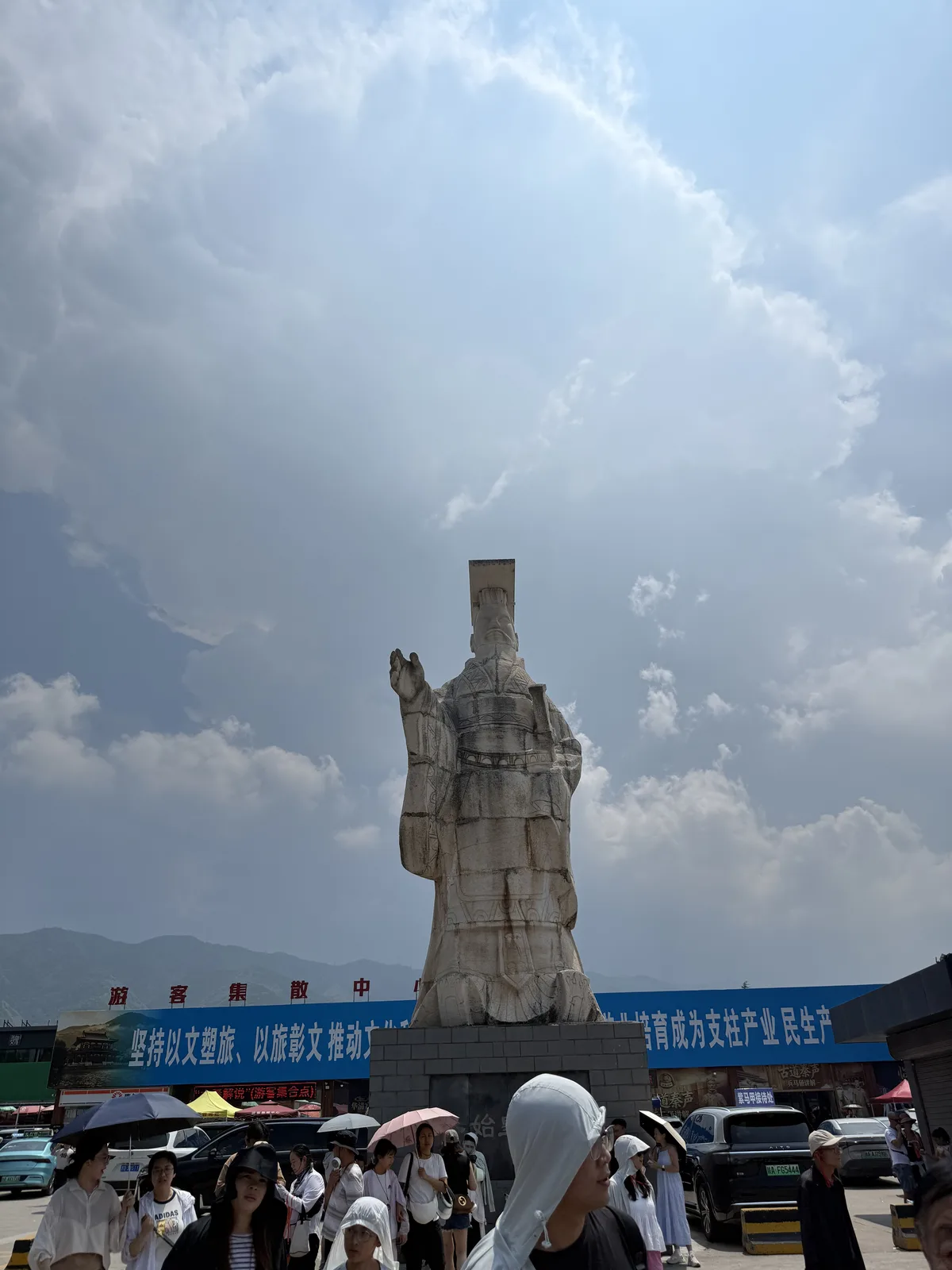
After getting off the bus, I still had to walk about 10 minutes. Follow the main flow of visitors until you reach the large Qin Shi Huang statue.
03 I booked the ticket on Trip.com
I booked through Trip.com. The on-site ticket price was RMB 120 when I visited, while I paid about US$18 (KRW 25,000) through Trip.com. The key detail for foreign visitors: my reservation was linked to my passport information, so I entered by presenting my passport rather than scanning a separate admission QR code.
04 Two passport checks — and the queue matters
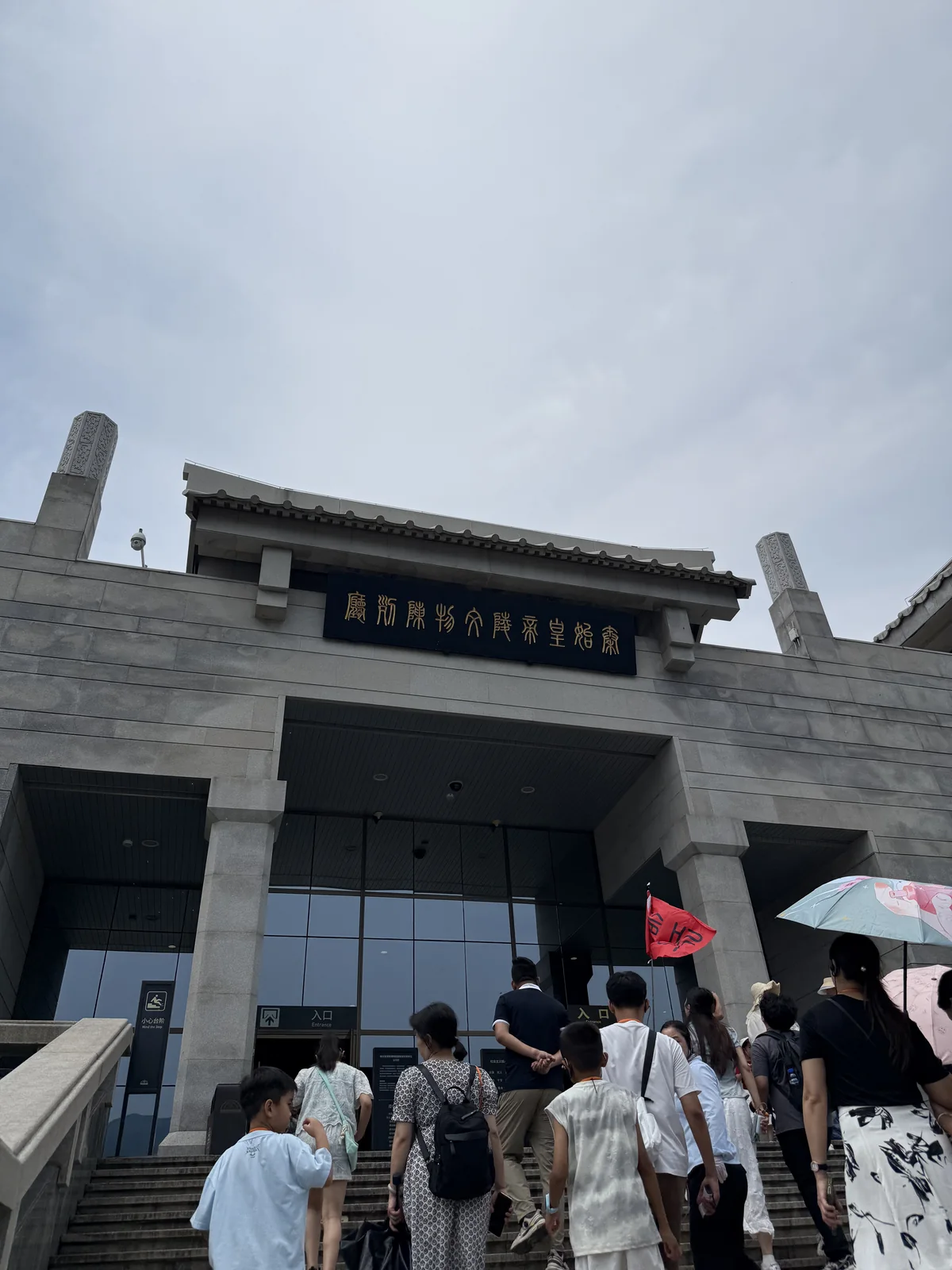
After the Qin Shi Huang statue, I reached the first passport-check area.
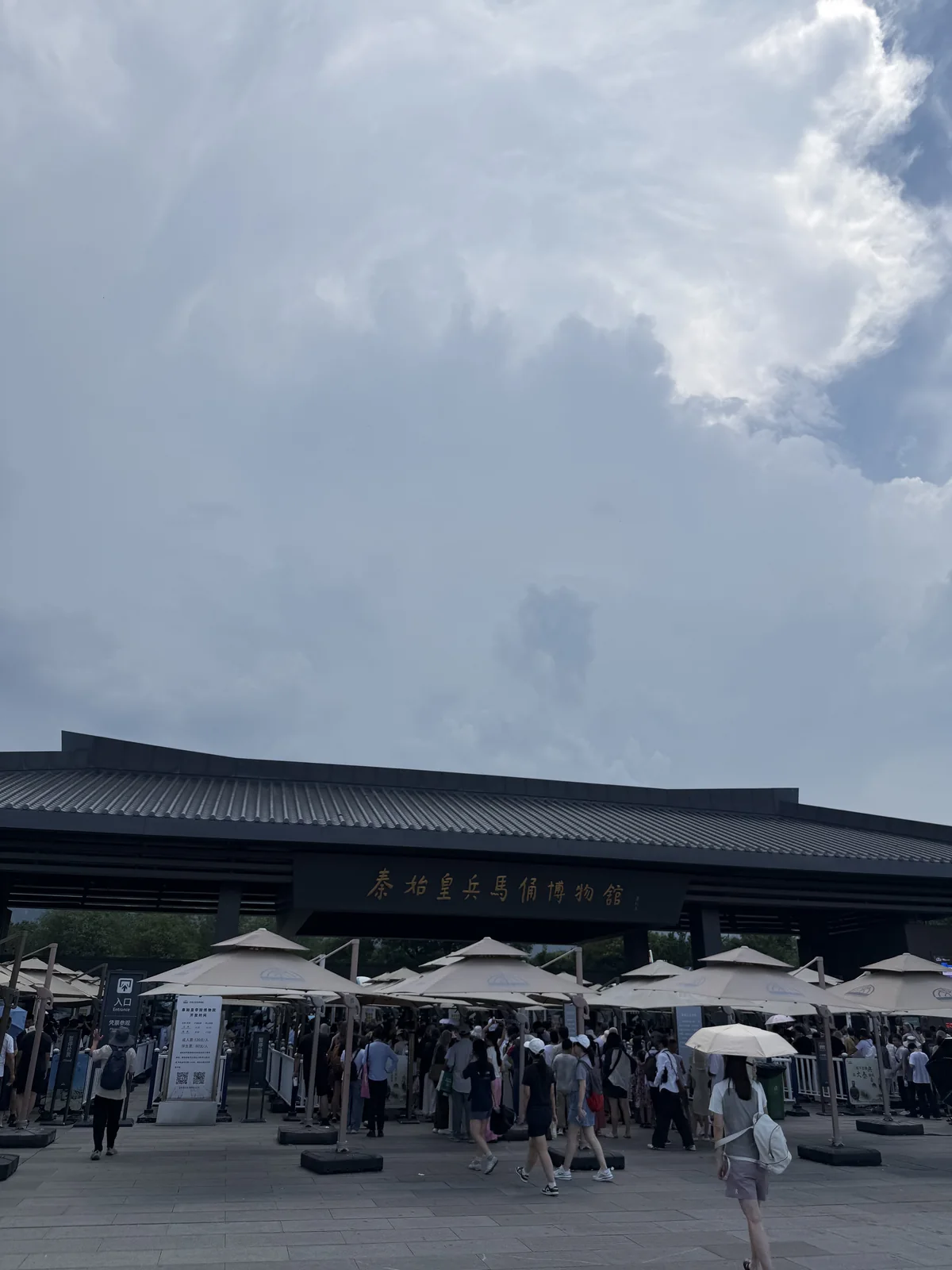
After that, I could either take an electric cart or walk roughly 10 minutes toward the next entrance area. I walked.
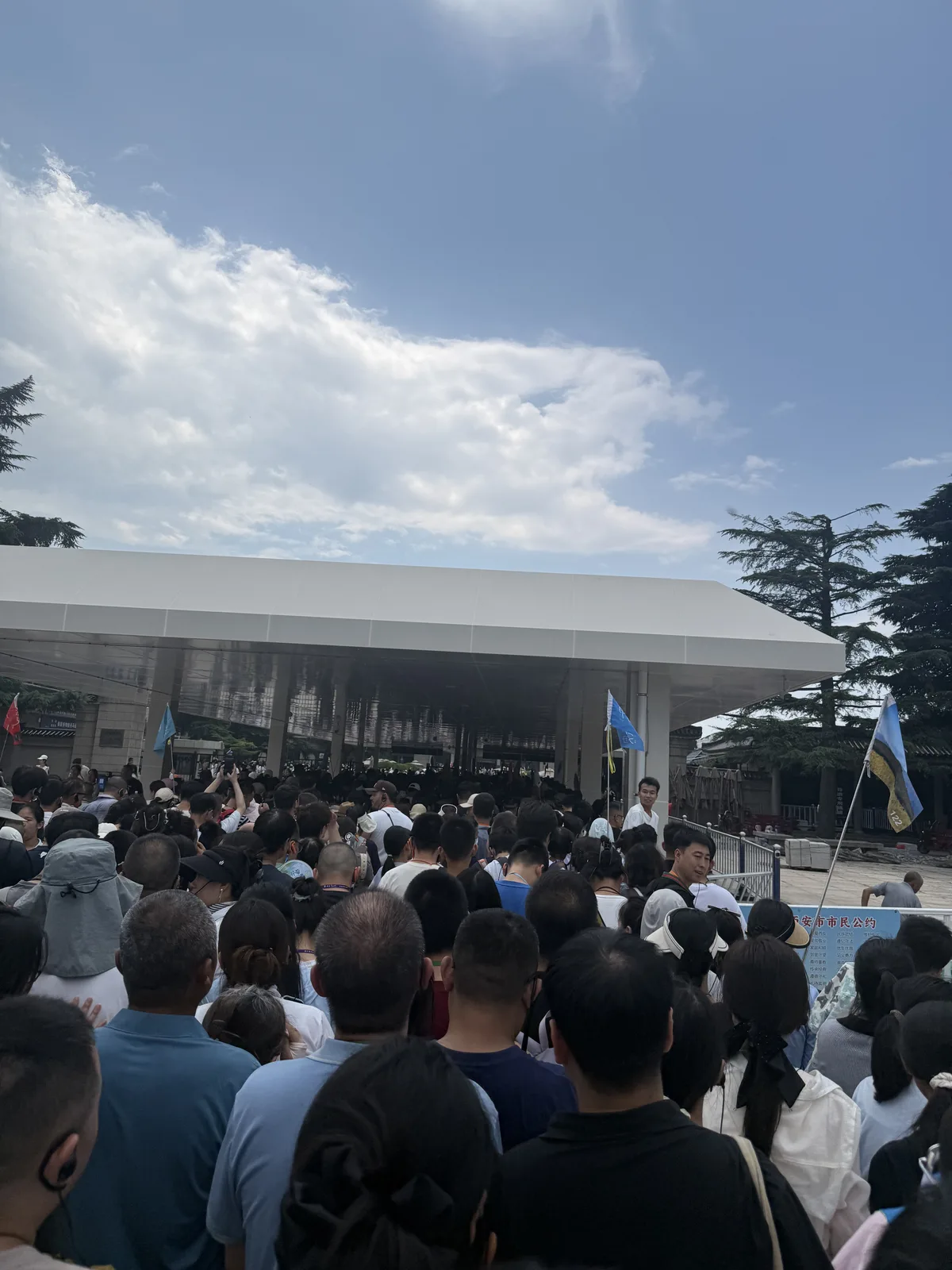
The crowd was dense. On my visit, the far-left side of the left-hand queue moved better. The lines eventually merged, and the right side became more congested where the flows joined. In a crowd this size, it also helped to keep moving with the person in front rather than leaving a large gap. I got through the final passport check and inside in under an hour.
05 Pit 1 → Pit 2 → Pit 3 → Museum
Pit 1 (一号坑) is the iconic hall filled with rows of life-size warriors.
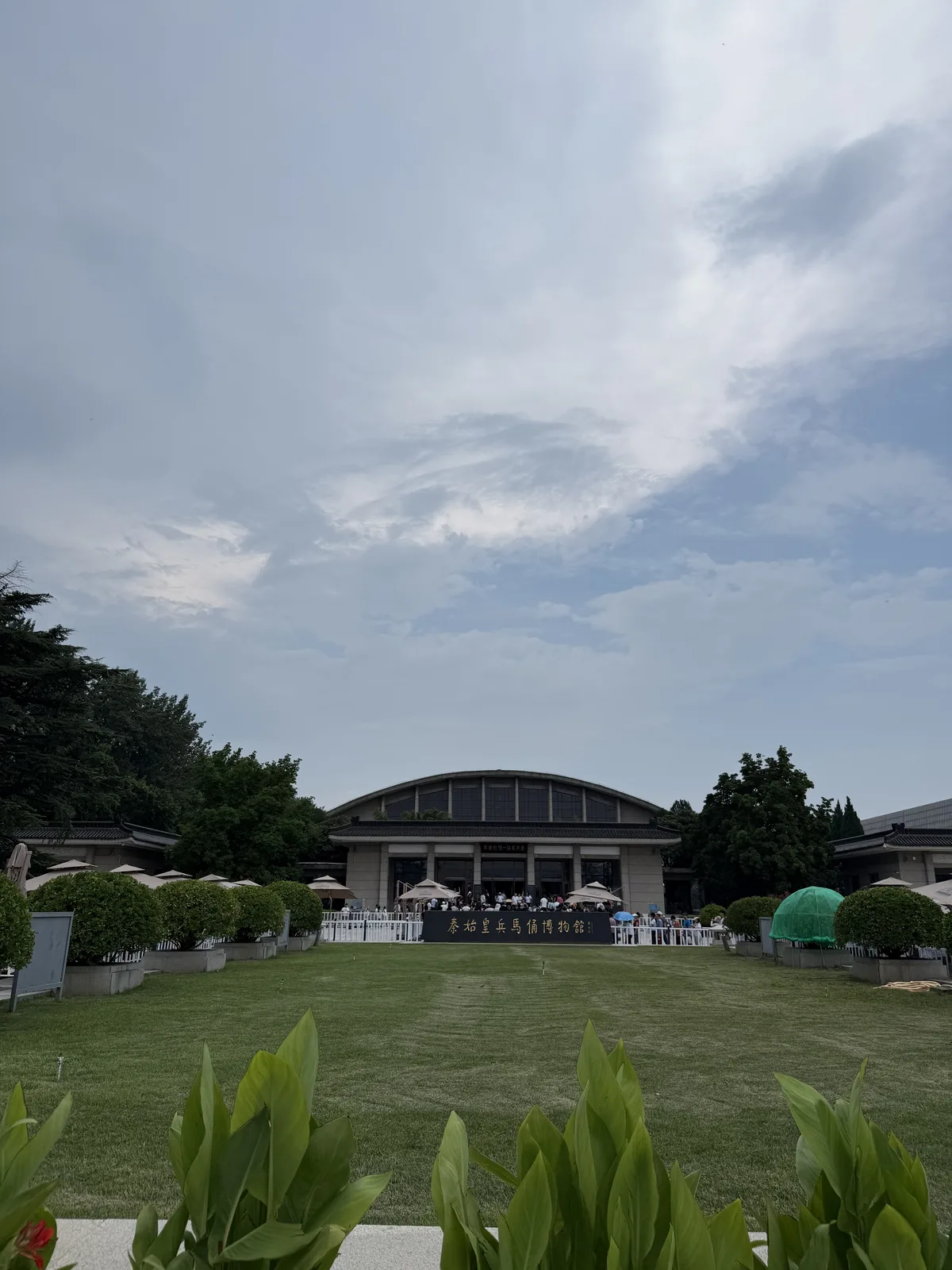
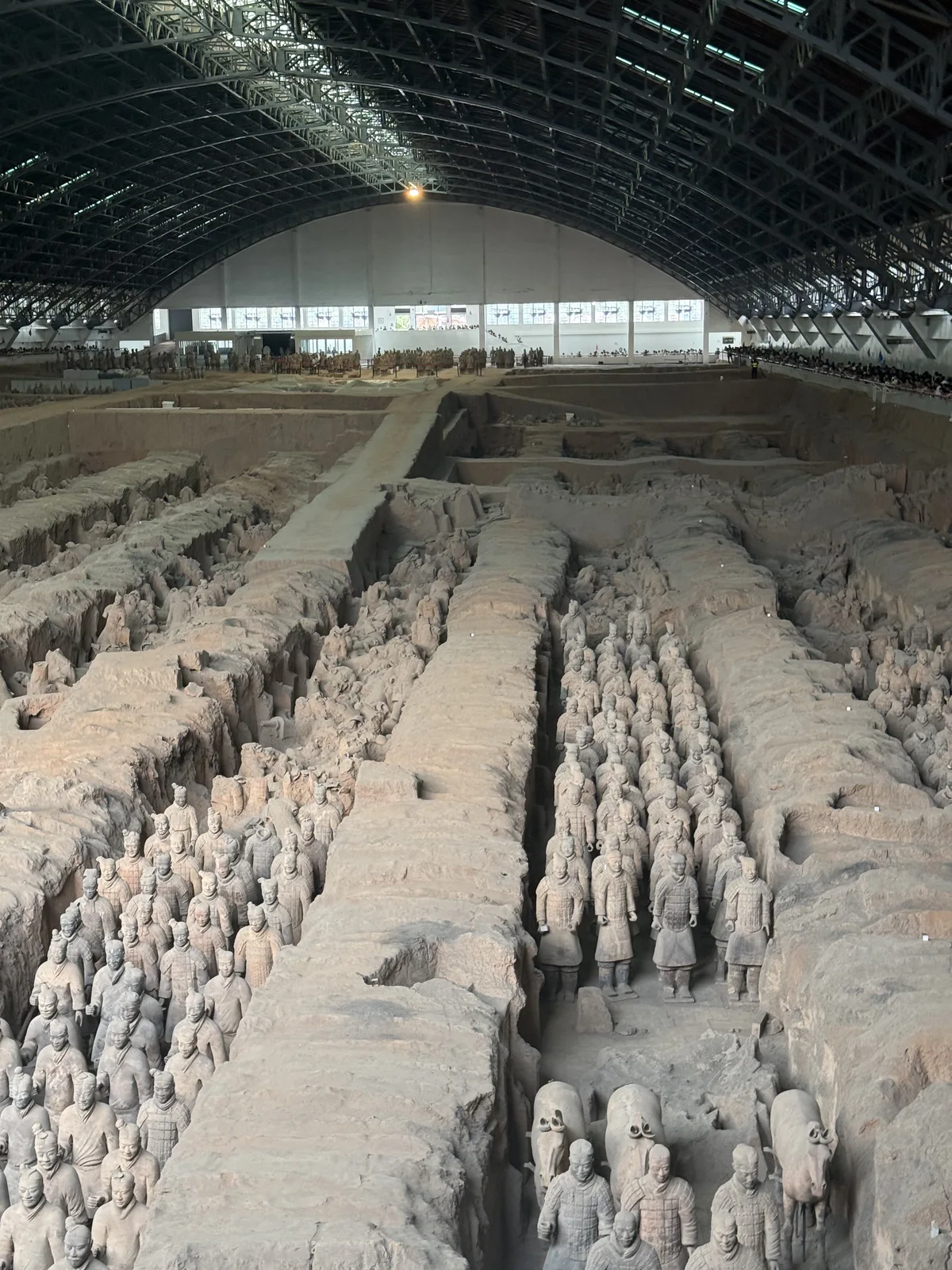
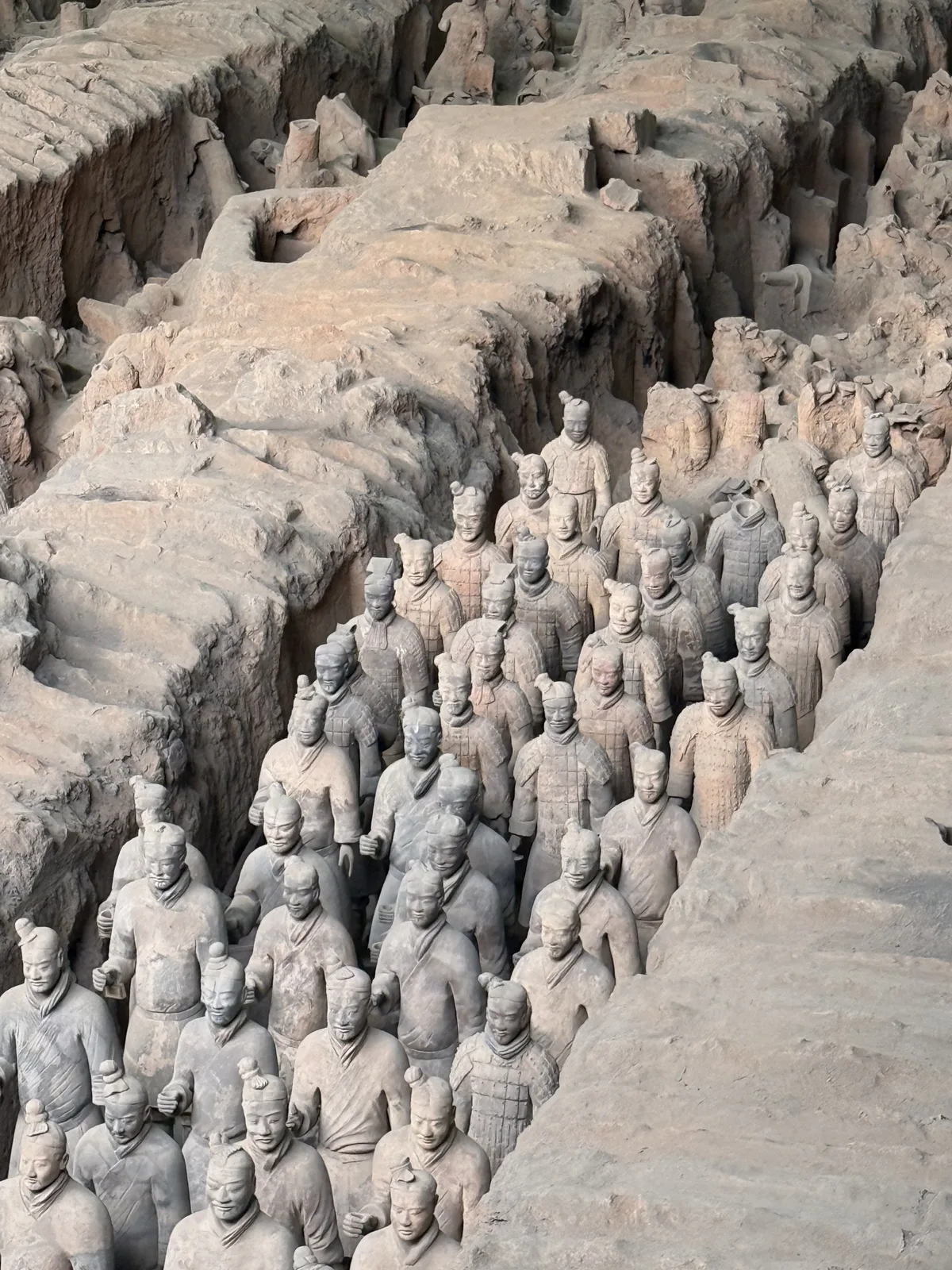
I continued to Pit 2 (二号坑) and Pit 3 (三号坑).
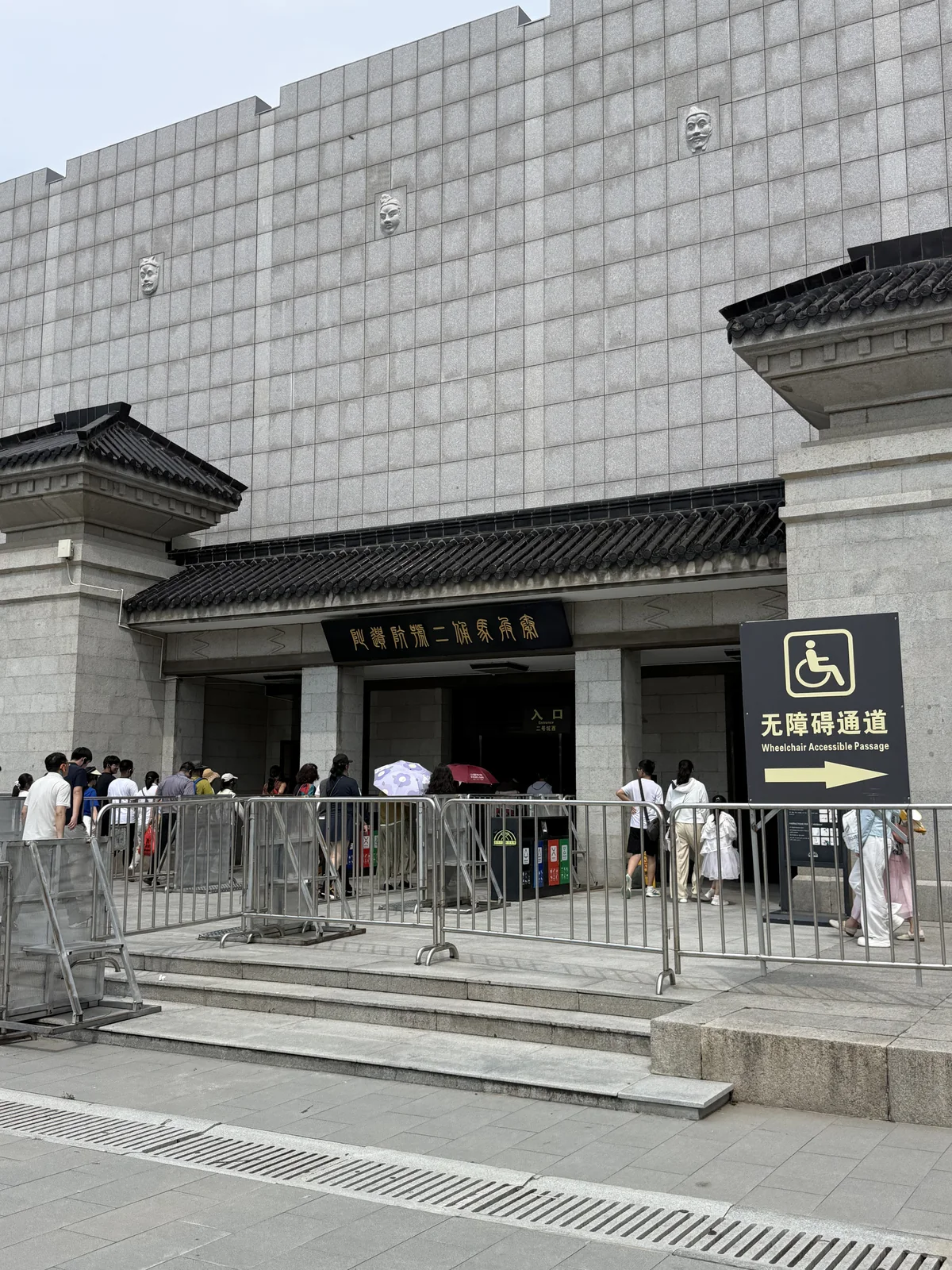
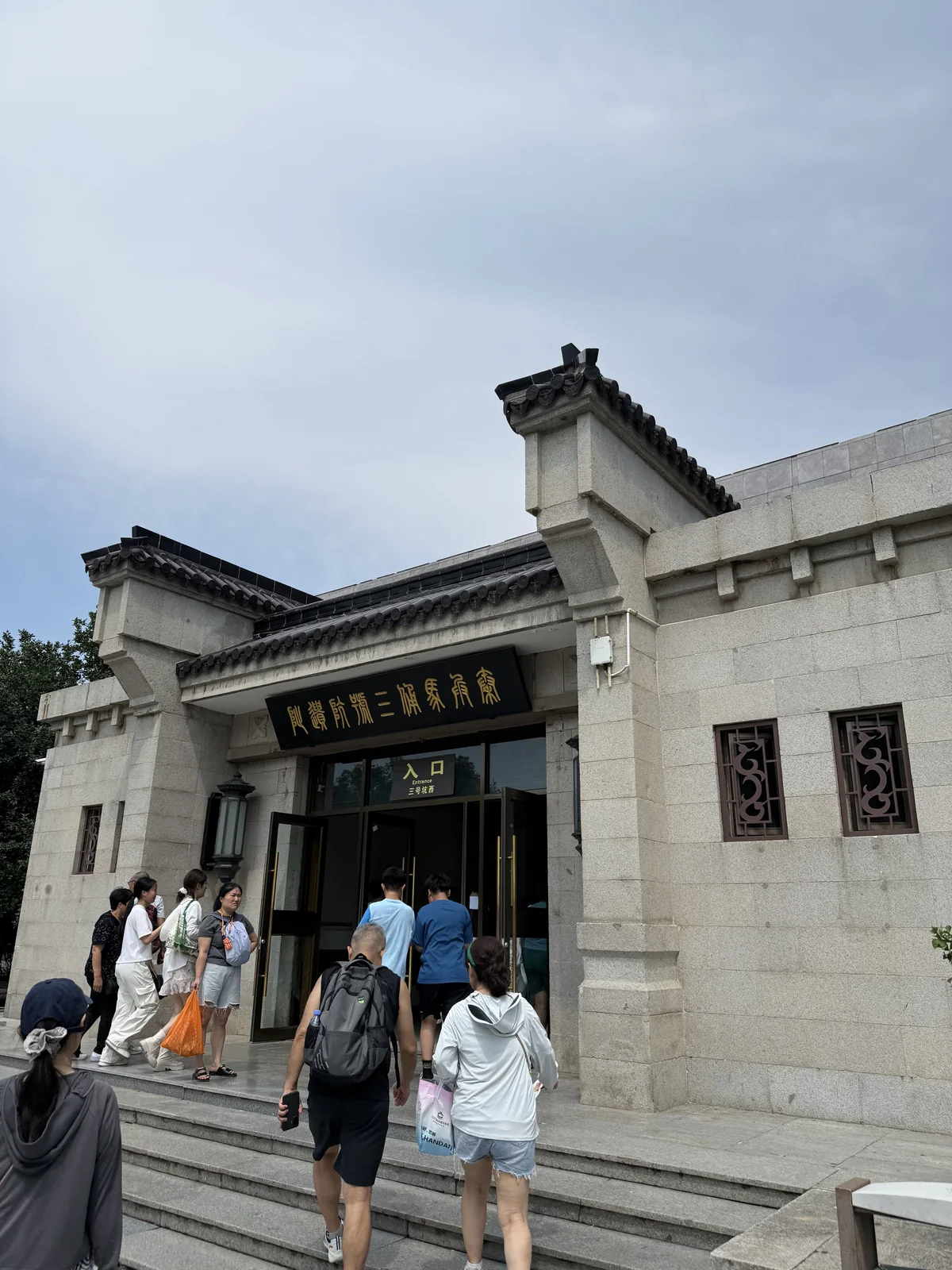
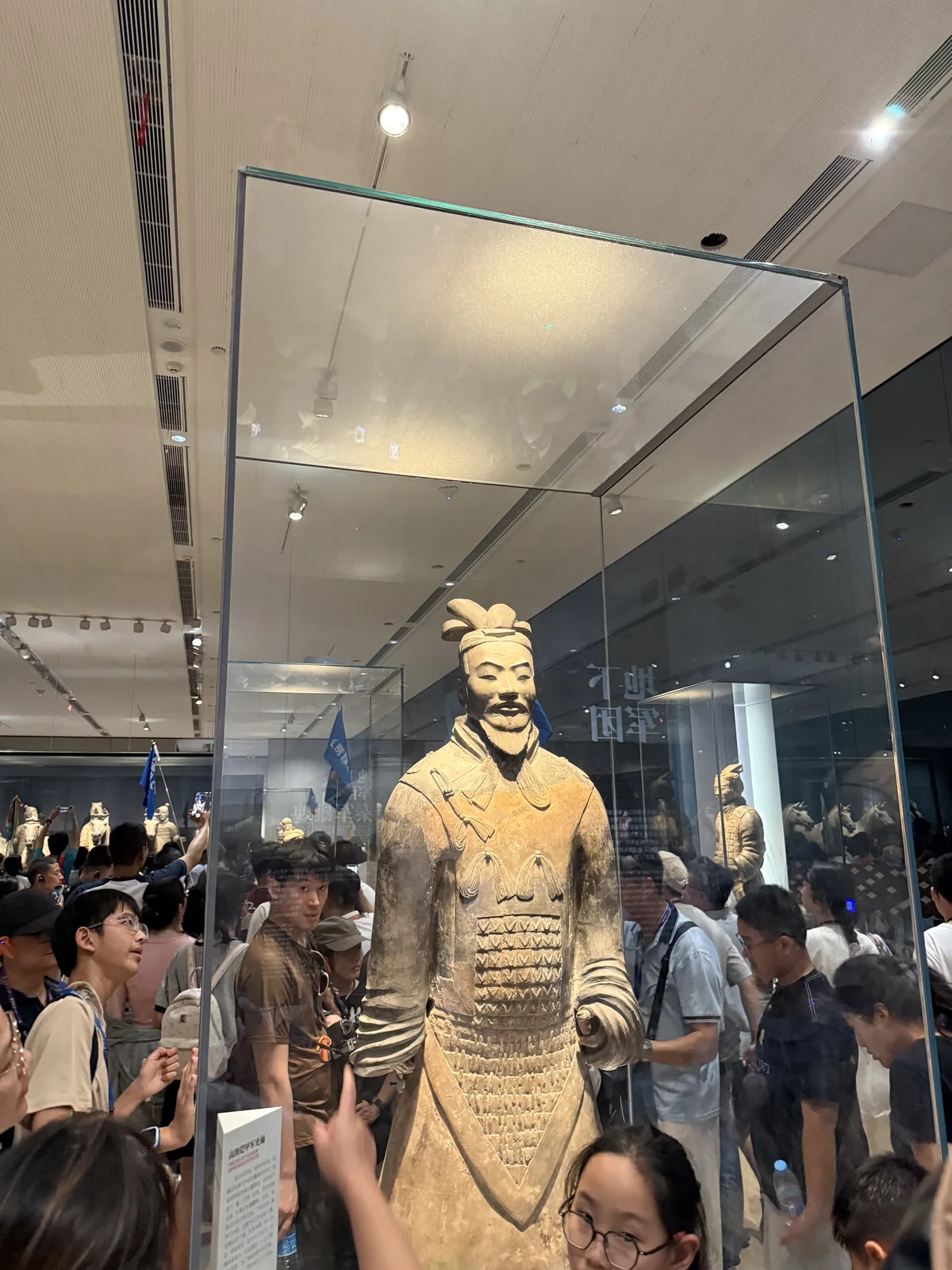
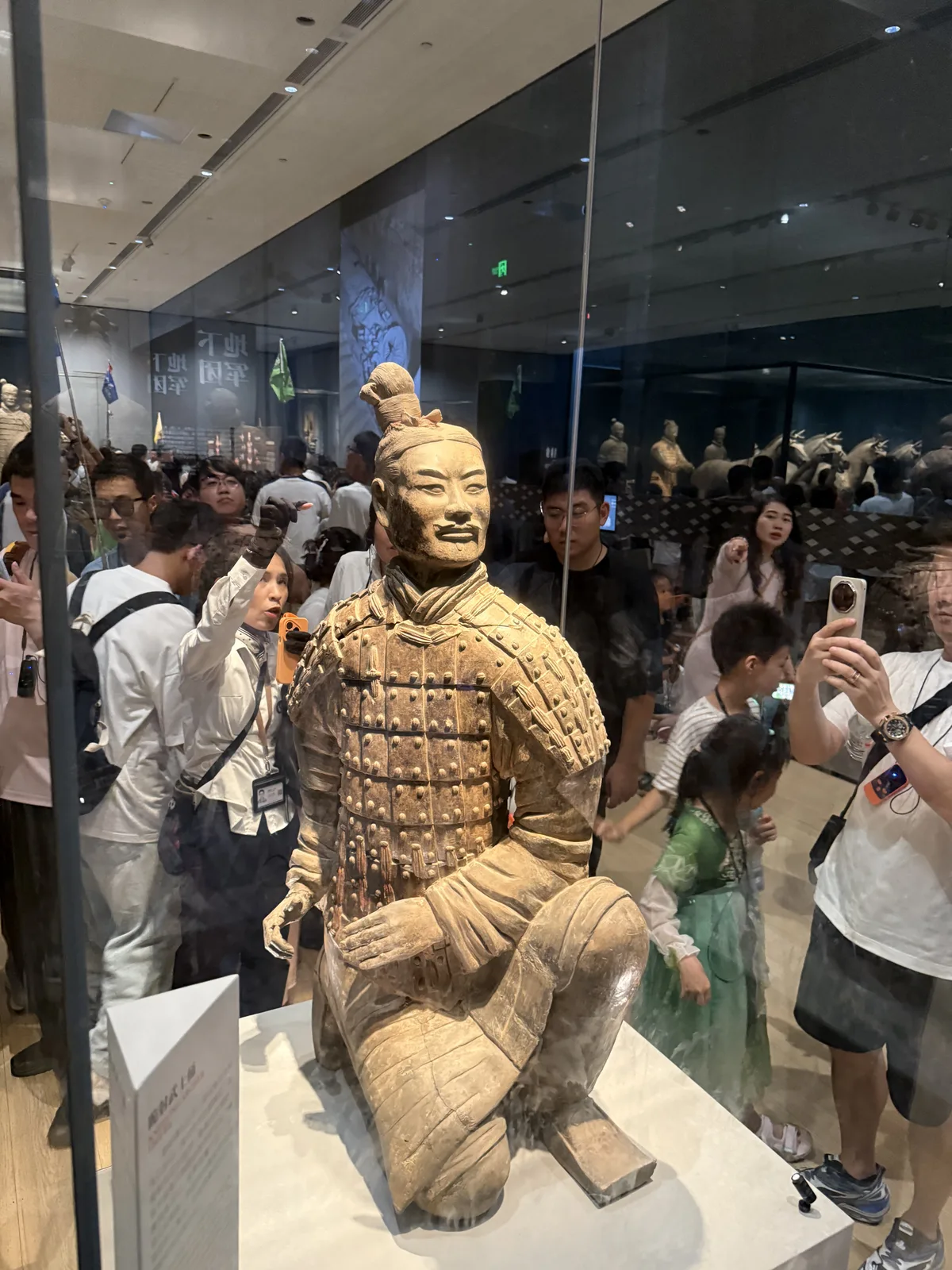
After the three pits, I went to the museum, where the figures and related displays can be viewed much more closely.
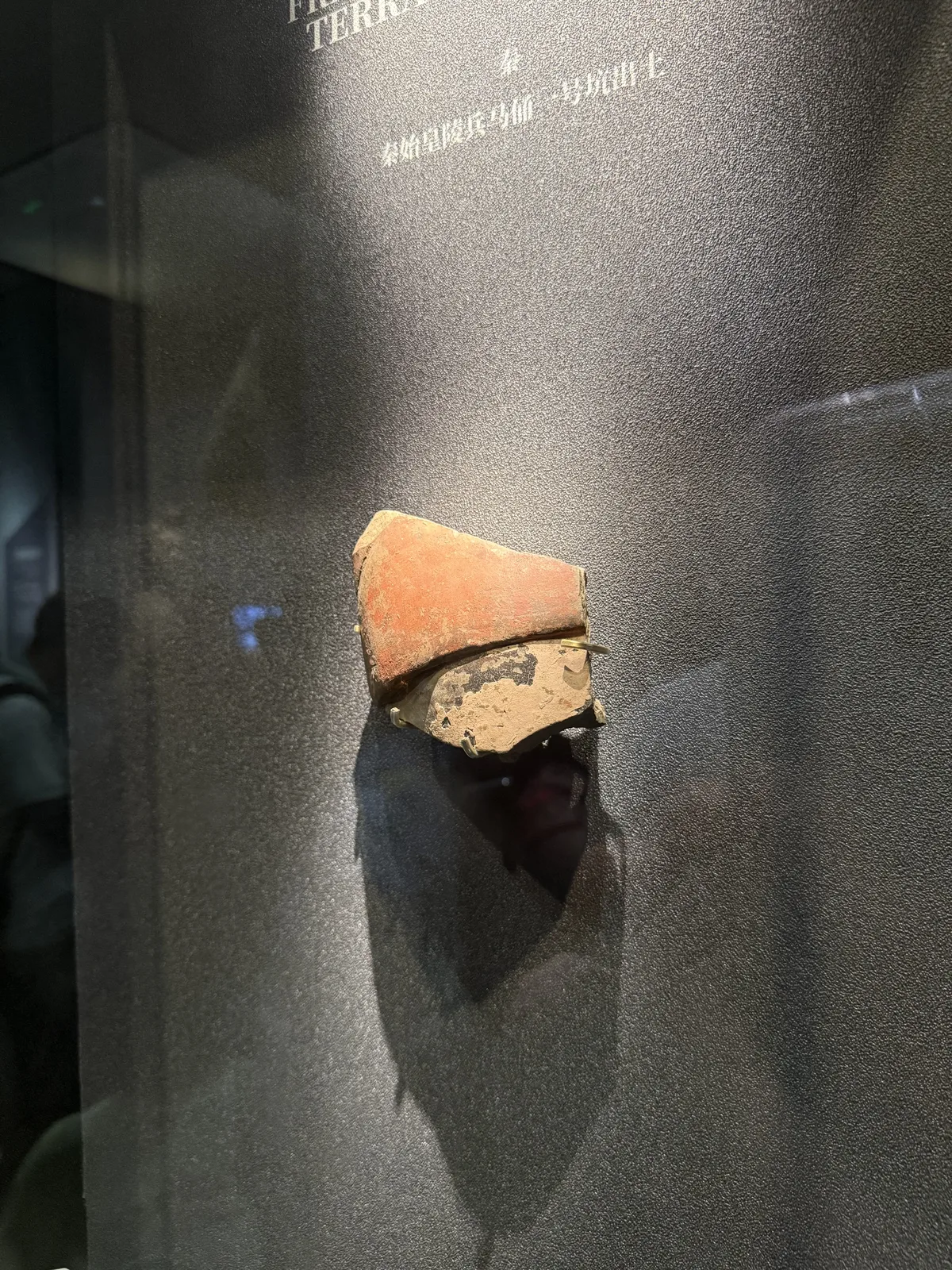
The warriors were not originally plain earth-colored figures. Many were painted, but the pigments deteriorated rapidly after excavation and exposure to air.
06 Free shuttle to the Qin Shi Huang Mausoleum
After returning to the Qin Shi Huang statue, I found the free shuttle to the mausoleum near the purple building. I actually ran into the same guides who had helped me in the morning, and they pointed me toward the shuttle again. The ride took about 10 minutes.
Inside the mausoleum area, I paid RMB 15 by scanning a WeChat QR code for the electric sightseeing cart. The electric-cart route had three main stops:
+ Civil Official Figures Pit (文官俑坑)
I was short on time, so I started from the second stop.
07 Bronze chariots and the burial mound
The second stop leads to the bronze chariot museum.
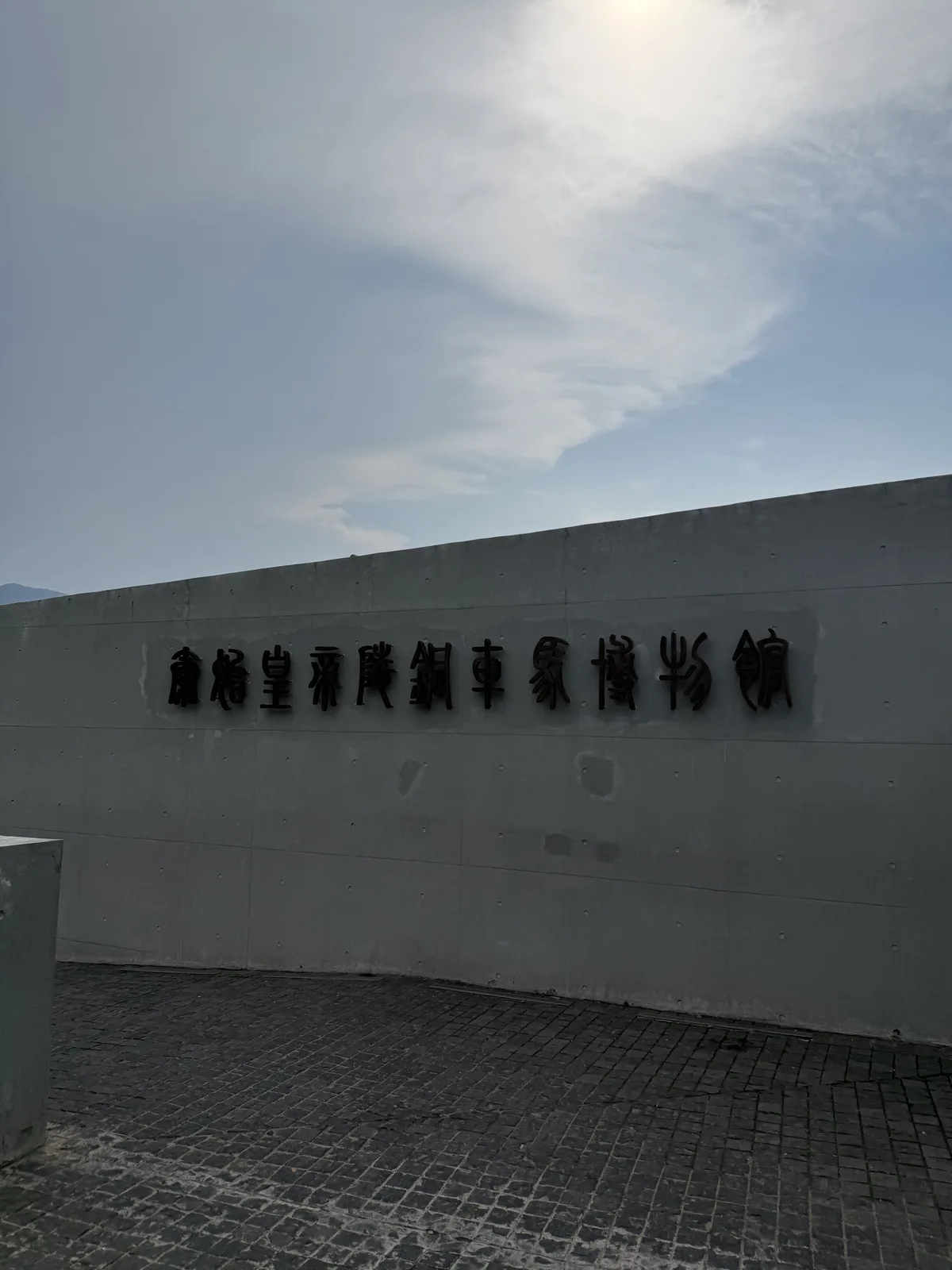
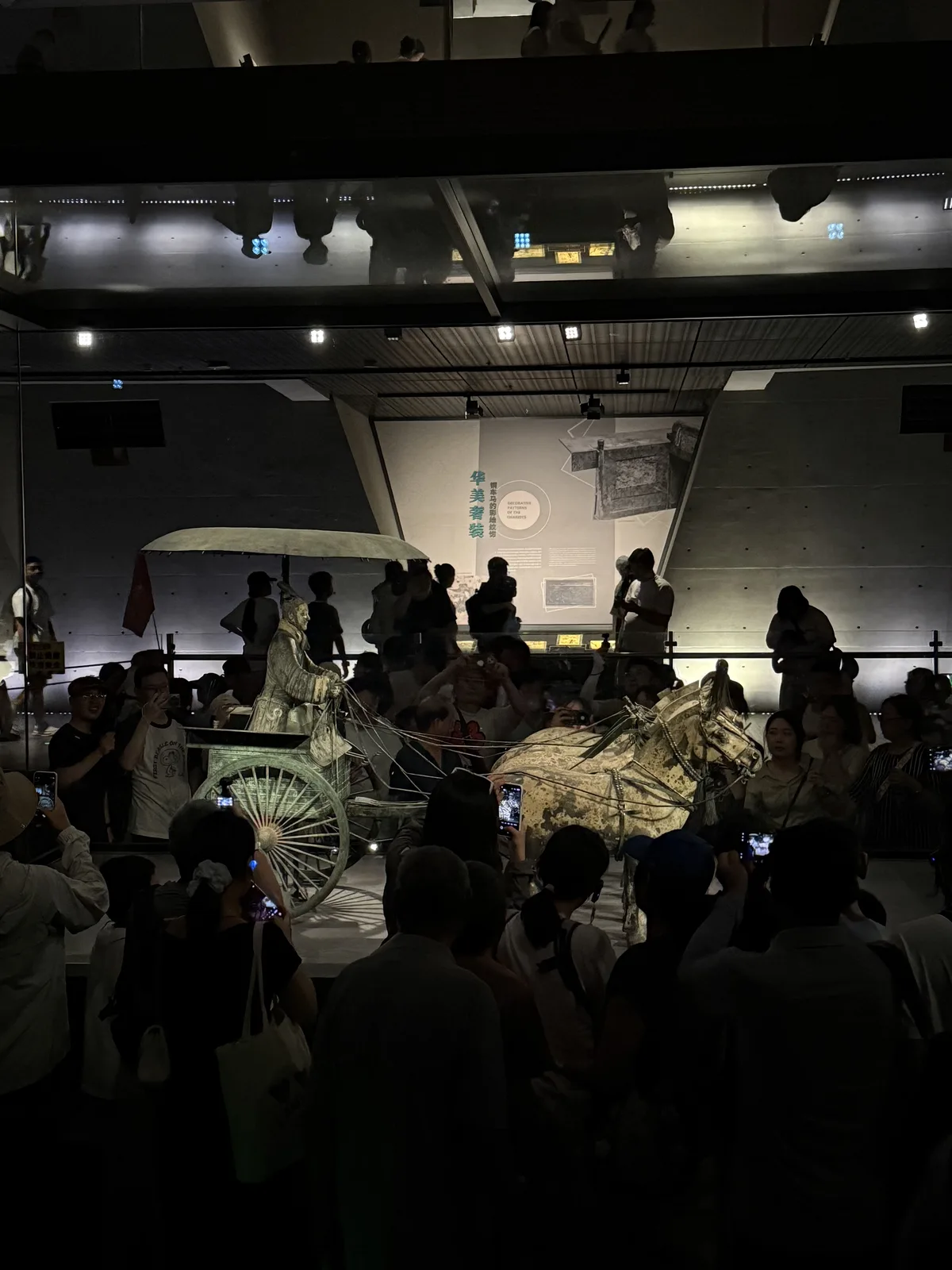
The bronze chariots are extraordinarily detailed scale models. Beyond being impressive objects, they show the Qin era's sophisticated casting and metalworking, as well as the ceremonial vehicle culture of the imperial court.
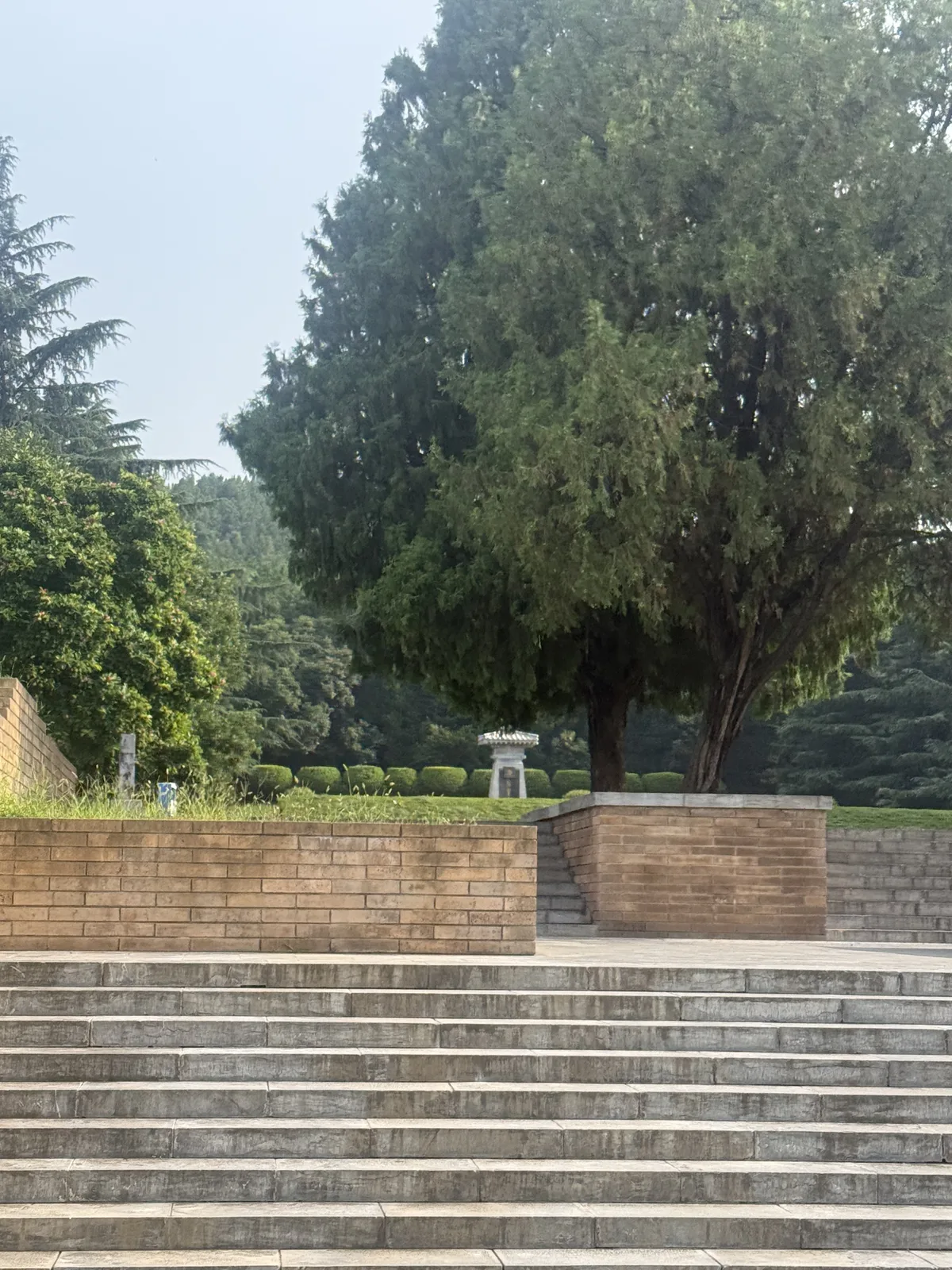
I then waited roughly one hour for the cart to the third stop. By then it was extremely hot and everyone looked exhausted, so I stayed on the cart and photographed the mound without getting off.
08 What I learned from visiting
The transport itself was manageable. What took the most time was waiting: entrance lines, internal transfers and the electric cart can all take longer than expected.
If you have time, I recommend continuing from the Terracotta Army to the mausoleum rather than leaving immediately. It makes the scale and purpose of the entire site much easier to understand.
STORIES
Traveler stories
Loading…